
Anfield Index
·21 mars 2026
FSG’s latest decision could have a huge impact on Michael Edwards’ future at Liverpool – Opinion
In partnership with
Yahoo sports
Anfield Index
·21 mars 2026
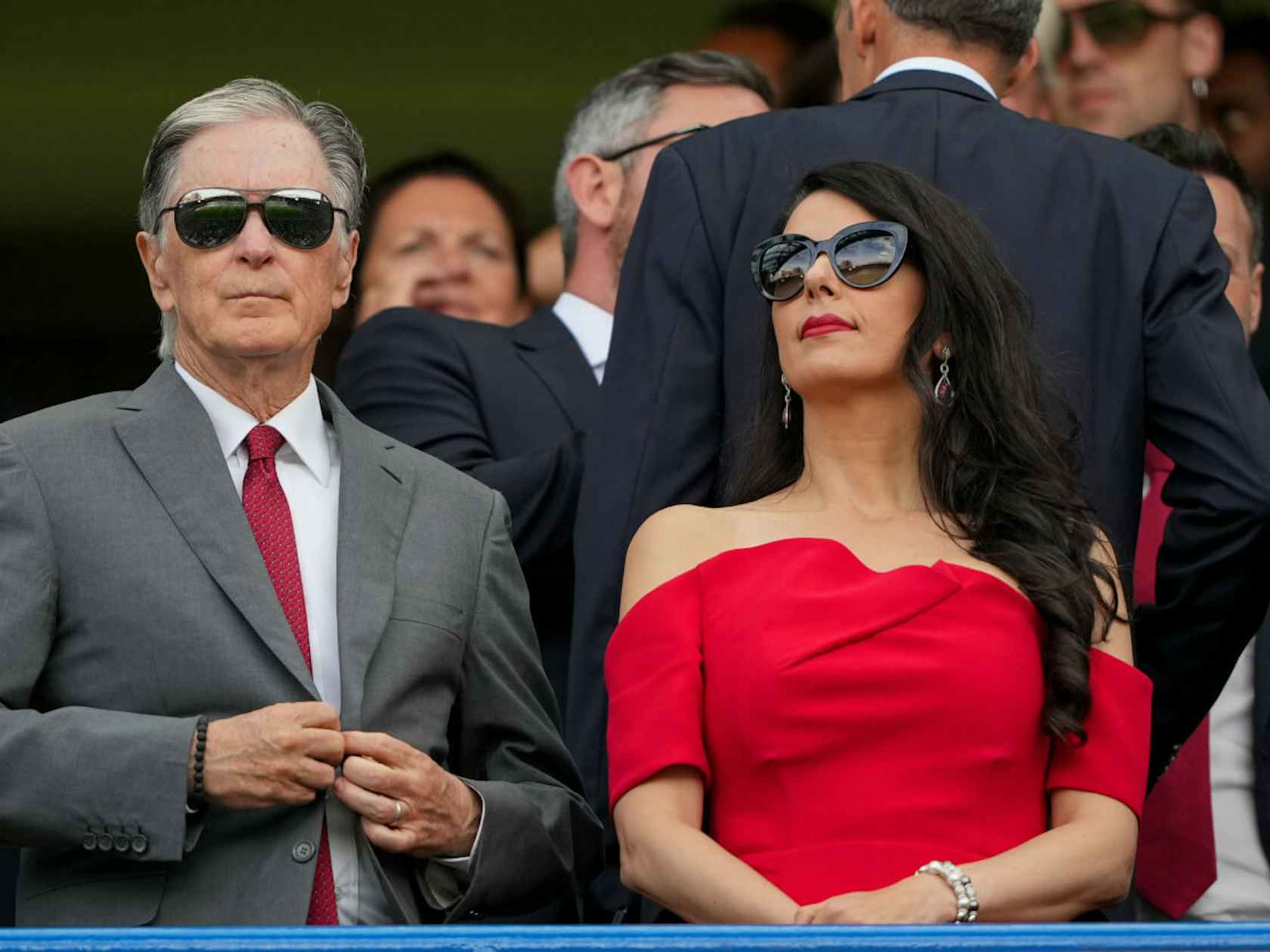
On the eve of Liverpool’s trip to Brighton, a significant development behind the scenes threatens to shape the club’s medium and long-term future far more than anything that unfolds on the pitch. Fenway Sports Group, led by John W. Henry, have reportedly decided against pursuing a multi-club model — at least for now.
This is not a minor adjustment. It is a fundamental shift away from what was believed to be the next phase of Liverpool’s evolution.
When Michael Edwards returned to the club as Sporting CEO, it was widely understood that his remit extended beyond Anfield. The vision was clear: identify, acquire, and integrate a network club — or clubs — that would allow Liverpool to operate with greater flexibility in recruitment, player development, and long-term squad planning.
Reports suggest that as many as 25 clubs across Europe and South America were analysed. The intention was not opportunistic; it was methodical and key to the return of Edwards. This was a model already proven elsewhere, designed to future-proof Liverpool in an increasingly competitive and financially complex football landscape.
And yet, after all that groundwork, FSG have stepped back.
The reasons appear rooted in financial caution. The cost of acquisition, the regulatory hurdles, and the operational complexity have combined to create hesitation by the paymasters. In isolation, that is understandable and even sensible. But in context, it raises a more uncomfortable question — is this ownership group still willing to push Liverpool forward at the level required to compete with Europe’s most ambitious institutions?
Because standing still, in modern football, is rarely neutral.
It is a regression.
The timing of this decision is particularly delicate.
Michael Edwards did not return to Liverpool to maintain the status quo. His reputation was built on innovation, efficiency, and a relentless pursuit of marginal gains that eventually culminated in Liverpool returning to the pinnacle of English and European football.
If the multi-club model was a central pillar of his long-term strategy, its abandonment — or even indefinite delay — inevitably creates tension and takes away a huge long-term opportunity that was key to long-term success.
Sources suggesting dissatisfaction should not be dismissed lightly.
At the same time, uncertainty continues to surround Richard Hughes, with growing noise linking the current sporting director to a lucrative move to the Saudi Pro League. Should that departure materialise, Liverpool would find itself in a moment of structural instability at precisely the time they require clarity and direction.
The hierarchy that once operated with near-perfect alignment — Edwards, recruitment, coaching staff — now feels less certain.
And that uncertainty extends onto the pitch.
A club’s footballing identity is not built in isolation from its executive structure. The inconsistency seen in Liverpool’s performances this season mirrors, in many ways, the ambiguity surrounding its strategic direction. Questions around the head coach remain unresolved, recruitment pathways feel less defined, and now the broader vision of expansion has been paused.
If Michael Edwards begins to feel constrained, the risk is not immediate departure — but gradual disengagement. And for a club that has already experienced the impact of losing him once before, that should be a sobering thought.
Liverpool has long prided itself on being proactive rather than reactive.
This decision feels different.
It feels cautious.
Perhaps even hesitant.
And in a sport where rivals continue to innovate, invest, and expand their influence globally, hesitation can be costly. Perhaps Edwards will assume his old position as Sporting Director, where he was the world’s most influential figure in that role, perhaps he walks away given that assurances have disappeared.
The Brighton fixture may dominate the immediate conversation, but the real story could lie far from the Amex Stadium.
Because if the vision at the top begins to stall, the consequences will inevitably filter down.
And Liverpool, once again, may find themselves searching not just for results — but for direction.
 À propos de Publisher

Direct


 Stream

 Stream

 Stream

 Stream

 Stream

 Stream

 Stream

 Stream

 Stream

 Stream

 Stream

 Stream

 Stream

 Stream

 Stream

 Stream

 Stream

 Stream

 Stream

 Stream

 Stream


