São Paulo
·1. Juni 2026
São Paulo players called up for the World Cup

In partnership with
Yahoo sports
São Paulo
·1. Juni 2026
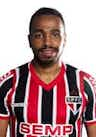
With Bobadilla’s call-up to the Paraguay national team for the 2026 edition, Tricolor reached 55 World Cup call-ups — the eighth for a player of a nationality other than Brazilian.
See below the list of foreign players who represented Tricolor when they were called up for the World Cup:
1974: Pedro Rocha and Pablo Forlán
The celebrated Uruguayan duo from Tricolor in the 1970s arrived at the World Cup in Germany with the responsibility of representing one of the tournament’s seeded nations, after all, four years earlier in Mexico they had reached the semifinals, being eliminated by the champion Brazilian national team.
Forlán, who had already played in the 1966 World Cup, wore the number 4 shirt, while Pedro Rocha, a veteran of FIFA’s biggest competition, took part in his fourth edition (he had also played in 1962, 1966, and 1970), wearing the number 10.
Both players took part in all of Uruguay’s matches in the World Cup. Unfortunately, the Uruguayan team did not go very far, falling in the first stage of the tournament. In the three matches they played, they earned only one point in a 1–1 draw with Bulgaria (goal by Pavoni). They lost to the Netherlands (0–2), the surprise team, and Sweden (0–3).
Forlán stayed with Tricolor until 1975, and Verdugo remained three more years, until 1978.
1986: Darío Pereyra
Darío Pereyra had a bit more luck. The versatile player (he played as an attacking midfielder, defensive midfielder, and center-back), who formed an unforgettable partnership with Oscar in Tricolor’s defense, reached the round of 16 of the World Cup. In the World Cup draw, Uruguay was placed in Pot 2, among strong teams, though not seeded. Alongside Denmark, Germany, and Scotland, it made up Group E in the tournament’s first stage.
La Celeste got a great result by drawing 1–1 with West Germany, but then suffered a thrashing from the surprising Danish Dynamite: 6–1. The aftermath was a 0–0 draw against Scotland. Darío, wearing the number 14 shirt, played only in that first-stage match. Having qualified in third place in the group, they faced Argentina in the knockout round.
The team from the other side of the Río de la Plata came out on top and won 1–0. Darío was on the field, but could do nothing to prevent Pasculli’s goal and his country’s elimination. Pereyra played for Tricolor until 1988.
1998: Víctor Aristizábal
The Colombian Aristizábal terrorized opposing defenses for Tricolor in the late 1990s, alongside França and Dodô. His performances took him to the World Cup in France, where, wearing the number 15 shirt, he appeared in all three matches Colombia played, though he was only in the starting lineup in the 1–0 loss to Romania.
In the 1–0 win over Tunisia and the 2–0 loss to England, the striker came on during the match in the second half and did not score.
In Group G, Colombia finished in third place behind Romania and England and was therefore eliminated. After the World Cup, Aristizábal left Tricolor and went on to play for Santos.
2014: Álvaro Pereira
Tricolor’s left-back in 2014 did not take part in La Celeste’s opening match at that World Cup (the Uruguayans lost 3–1 to Costa Rica). The number 6, however, took over the position in the following round and helped his country to a 2–1 win over England, staying on the field for the full 90 minutes.
In the final first-stage match, in the thrilling and decisive victory over Italy, Álvaro Pereira was on the field for 63 minutes until coach Óscar Tabárez replaced him with Christian Stuani.
With that result, Uruguay finished second in Group D with 6 points, one behind Costa Rica. In this way, they qualified for the round of 16, where at the Maracanã they faced Colombia. Álvaro Pereira played until the ninth minute of the second half, when Uruguay was already trailing 2–0 to the Colombians, making way for Gastón Ramírez. But nothing changed. Uruguay was eliminated by Colombia by that score.
After his spell with Tricolor ended (a loan from Internazionale) at the end of 2014, Álvaro returned to Italy and soon afterward moved to Estudiantes de La Plata.
2018: Cueva
A São Paulo player since 2016, Cueva was the first Peruvian player to represent the club at a World Cup. Wearing the number 8 shirt, the midfielder played in all three of his team’s matches in the competition.
He made his debut against Denmark and ended up being decisive in the outcome, as he missed a penalty in the match Peru lost 1–0.
In the next match, against France, Cueva was replaced by Raúl Ruidíaz with eight minutes left, with the opponent already leading by what would be the final score, 1–0.
The midfielder’s best performance came in the final round, against Australia. Peru opened the scoring through Carrillo in the first half and, in the second half, Cueva combined with Trauco and found Paolo Guerrero to score the second goal and seal the Peruvian national team’s victory, which ended the World Cup in third place in Group C.
2022: Arboleda
The Ecuadorian, who has played for São Paulo since July 2017, was called up for the Qatar World Cup, but the center-back did not take the field in any of Ecuador’s matches in that edition.
After a promising start, beating the host nation 2–0, Ecuador drew with the strong Netherlands but was eliminated from the competition after losing to Senegal in the final round of the first stage. The country ultimately finished only third in Group A, with four points.
Special case
The case of Ecuadorian player Reasco is different from the other players presented in this work. Reasco did not go to the 2006 World Cup as a Tricolor player, but rather while playing for LDU Quito. However, by the start of the World Cup, the right-back already had a contract with São Paulo.
In this way, his name is not officially linked to Tricolor under the most common analysis criteria, but his participation is worth mentioning here. Wearing the number 18 shirt, Reasco was only absent from Ecuador’s 2–0 defeat to Germany. With him on the field, Ecuador beat Poland 2–0 and Costa Rica 3–0. They were eliminated, however, in the round of 16 by England (0–1), after finishing second in Group A in the first stage, just behind Germany.
Reasco only joined Tricolor the following August. In his very debut, against Goiás, he suffered a serious injury. Injuries that followed him throughout his time at São Paulo. It was a three-year spell, from 2006 to 2008. Few people notice it, but the Ecuadorian was one of only nine men to win the Brazilian championship three times in a row.
As for Brazil…
Also see the list of call-ups to the Brazilian national team:
*There is some dispute regarding Araken’s name, but it is certain that before the call-up for the 1930 World Cup, the player’s last match was for São Paulo.
This article was translated into English by Artificial Intelligence. You can read the original version in 🇧🇷 here.
 Impressum des Publishers ansehen


 Stream

 Stream

 Stream

 Stream

 Stream

 Stream

 Stream

 Stream

 Stream

 Stream
 Stream

 Stream

 Stream

 Stream

 Stream

 Stream
 Stream

 Stream

 Stream

 Stream